
A Look on the Bright Side: A Few Benefits to Having a Baby While in College

Me on Instagram: Made cupcakes w the kids, love them so much. Me for real: YOU’RE GETTING EGGSHELLS IN THE BATTER JESUS CHRIST LET ME DO IT

 Vampire Valerie

**PSA: THIS IS BY NO MEANS ENCOURAGING COLLEGE STUDENTS TO GET PREGNANT. THIS IS JUST AN ATTEMPT AT OPTIMISM FOR THOSE THAT HAPPEN TO BE IN THIS SITUATION.

So you’re in college and you’re having a baby.

Bottle service, VIP booths, sweaty dancing, nights drinking Monster in the library–they’re all gone. It’s now evenings at home, watching TV really quietly, and enjoying your child-free hour before bed.

Having a kid while you’re of traditional college age, or in college at any age, isn’t ideal. You have other commitments and responsibilities, and the general consensus is that you should probably wait to reproduce until after graduation.

But if this isn’t your reality, and you’ve come to terms with your decision to have a kid, then congrats! Here are some perks to having a child while in college:

It May Benefit Your Career

Providing you graduate from college despite your bundle of joy, you can kick start your career with the whole “having a kid” thing out of the way.

Many college graduates land their dream job at age 26/27, and then quit or take significant time off said job only a few years later, when maternity and paternity leave takes precedence to their work.

If you’ve already taken your leave before you even start your career, then it definitely won’t get in the way. And, sure, you’ll have to leave early or avoid working late to accommodate your child’s schedule–but your boss will know this before they hire you and you won’t have to pause your career in the near future.

If You’re of Traditional College Age: You’ll Have More Energy and Be a Younger Empty Nester

If you’re having a baby at 21/22/23/24 years of age, then you’ll have more energy than you will in your 30s. This is by no means a reason to have a child this young, but it’s definitely a perk if you so happen to be in this situation.

Toddlers are exhausting. They run everywhere and they keep you up all night. So if dancing and cramming your days away is second nature already, then this may benefit you.

Likewise, if you have a baby at 22, then by 40, you will be an empty-nester. This means you will be young and active enough to enjoy life after your children leave home. You will have another lifetime to enjoy your grandchildren, and (maybe, hopefully) early retirement.

It May Motivate You

This is a highly subjective benefit, but a potential perk nonetheless.

For some college students, wondering aimlessly through their general ed with no purpose and no direction, having a kid may be motivating.

When you have a new human to pay for, paying for random college credits may no longer seems as enticing. You have to knuckle down, do well, and graduate as fast as possible. This may be the incentive you need.

A Few Perks and a LOT Of Challenges

Swapping out formula bottle service for champagne on ice (this is a thing now?) is not easy. You should take whatever precautions you can to avoid that.

But if you’ve made a decision, and you’re met with constant negativity, there is no shame in looking on the bright side. For what it’s worth, champagne on the rocks is not good. Not at all. So you’re not missing out on much.
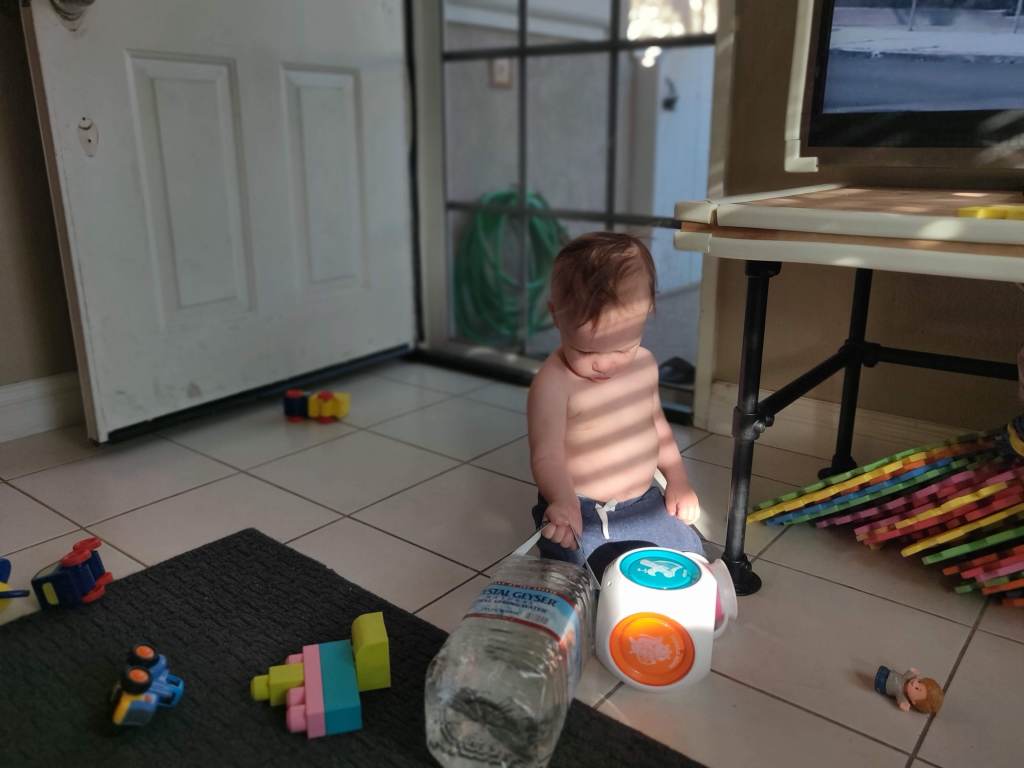
How to Mix Finals with a Baby

“So I stepped away for like two seconds…” the beginning of a parenting horror story

Rookie Moms

There are some things in life that don’t mix too well. Oil and water, OJ and toothpaste, and babies and finals.

Your whole semester hangs in the balance. Maybe graduating is even at stake. And the last thing you want to think about is how to study and perform well with a baby at your hip.

This isn’t an impossible task, but it does make final exams a little more stressful than they already are. In order to manage the stress a little better, there are three important things to consider beforehand: finding childcare, organizing your study time, and giving yourself an opportunity to decompress.

Childcare

Unfortunately, it’s highly unlikely that you will be able to complete your exams without childcare. Even if you’re studying online, the stress of having to tend to your screaming child in the middle of a timed test is almost unbearable.

Childcare could be provided by your partner, a family member, a friend, or even a paid sitter who can watch your baby in the living room for an hour two. Ideally, you should try to organize childcare a few weeks before your exams, so you can dedicate your free time to studying.

Organizing your study time

When time is in short supply, it becomes all the more critical that you organize it wisely. You should aim to devise a weekly schedule that dedicates reasonable portions of your day to each class.

You may consider working around bedtimes and nap times. For example, if your baby is on 1, 2 hour nap per day — then this may be the perfect opportunity for you to do reading and studying that requires you to be alert. Later in the day, after your kid goes to bed, may be the quiet time you need to work on final papers.

Giving yourself a break

Studying is stressful. Babies are stressful. Combining the two can cause what may seem like an insurmountable amount of tension and worry. It is, therefore, imperative that you give yourself time to decompress.

Good luck!

When Gaining a Baby Means Losing a Friend

Parenthood is the scariest hood you will ever go through

Anonymous

Sometimes, having a baby means losing a friend.

The harsh reality is that not everyone loves, or even likes, kids. And when you become a parent, your baby becomes your entire life, so it’s difficult to reconcile your new universe with a friend who wants no part of it.

If you’re in college, you may lose more than one friend. You may find yourself at odds with your entire friendship group. If you can’t party, you can’t drink, you can’t even relate to the relationship drama or meaningless conversations about a “future” you’re no longer working towards–then you may get left out.

It’s annoying; but it’s a new reality. You may no longer have as much in common with your friends as you once did, and no matter how many times you watch their Instagram stories and stew with jealousy, this won’t change.

The great thing about becoming a parent, however, is that you can relate to a whole group of people.

And there’s no better way to make friends than to have your kid do it for you. Play groups, story-times, events at daycare, random outings to the park. There are so many opportunities for you to meet moms and dads who you click with, and can relate to, for the rest of your life.

If your friends stick by you, then this is a testament to your friendship and the strength of your relationship. But if you just had a baby, and your friends are MIA, know that you’re not alone. As soon as your kid can play nice, he’ll start matchmaking for you.

FIY there are also “dating apps” designed to link up parents, like Peanut!

Quarantine Activities: How to Keep Your Toddler Occupied for More Than Five minutes

“Silence is golden. Unless you have kids, then… silence is just suspicious.”

LifeCake

Toddlers have a very short attention span. No matter how expensive, or interesting, their new toy may be — it’s unlikely it will captivate them for more than five minutes.

So, unless your activity involves playing with electrical outlets or any other forbidden fruit, finding something to entertain your baby with at length can be difficult.

Nonetheless, when in quarantine, a difficult task that may give you an hour of peace is worth the challenge. And, given how fascinated toddlers are with household items, you don’t have to spend a lot of money to keep them busy.

The key is to give your toddler access to things they want to play with (but shouldn’t) in a controlled environment.

SENSORY PLAY

Super Easy Sensory Play: Rice Play

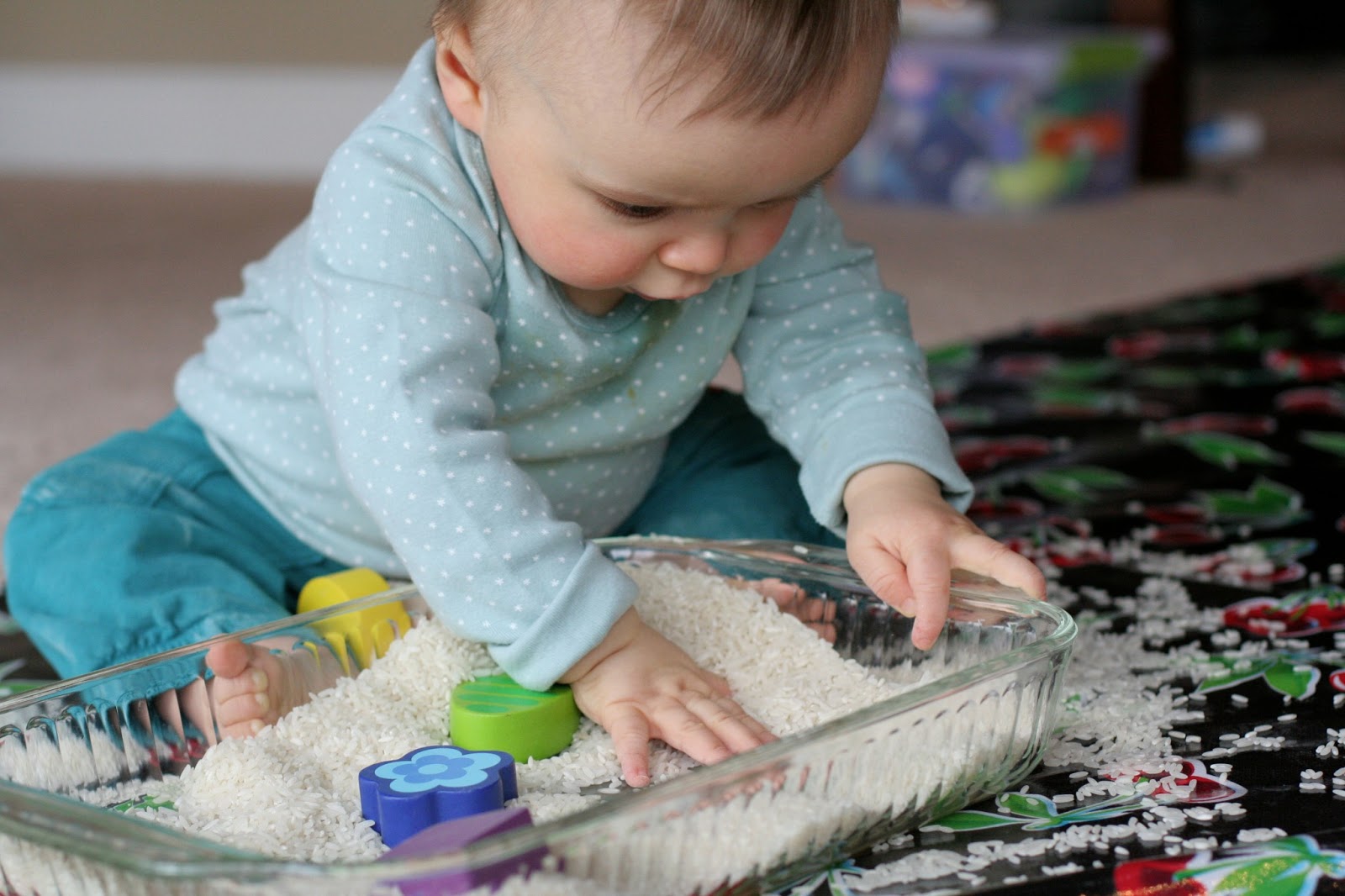
Sensory play is a great way to keep your toddler busy, and rice is the cheapest, easiest way to engage in this type of activity.

It’s as simple as emptying some rice into a wide dish, and giving your toddler a plastic spoon to aid their imagination.

A few suggestions: if you have an outdoor patio, you may consider doing it outside. This activity can get messy. Also, the wider and heavier the dish, the less likely your baby is to tip the entire thing upside down.

Lastly, while using a larger item like beans or noodles may seem less messy and easier to contain, it’s important to remember that these could pose more of a choking hazard than small grains of rice.

WATER PLAY

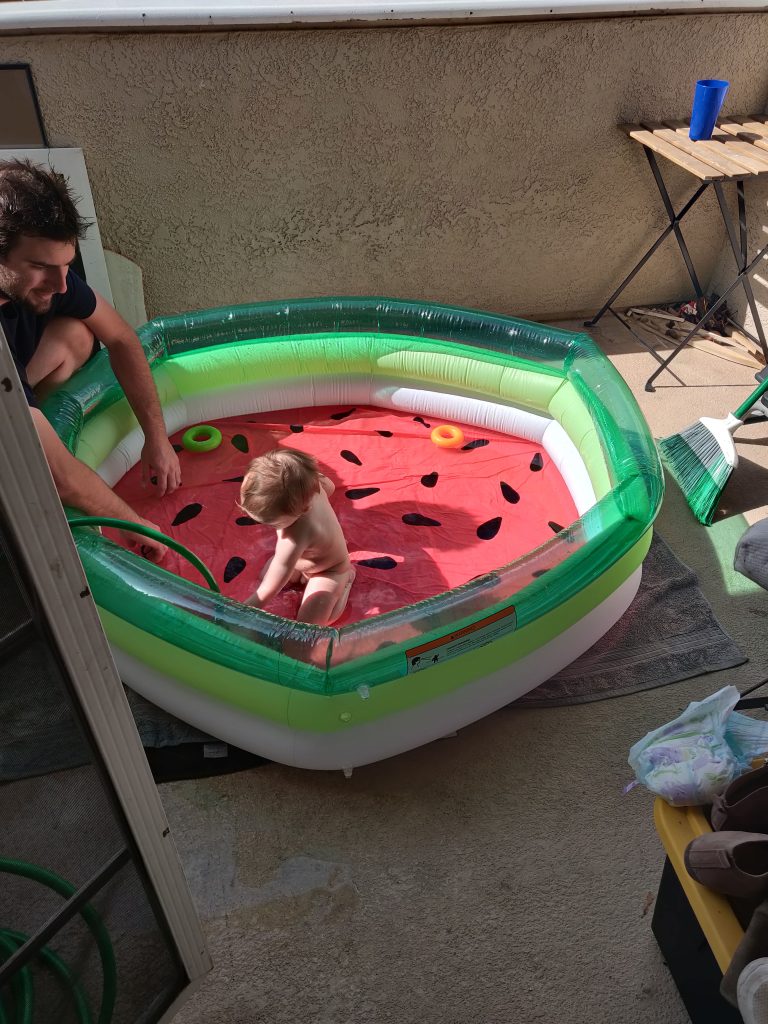
There are few things toddlers love more than splashing in water (when hygiene isn’t involved), and if the weather permits, then this is a great option to keep your kid busy.

A water table is a toy actually designed for this purpose, but they can be costly and impractical in a small outdoor area. For this reason, you may consider using a blow up pool, a baby bath tub, or even a large bucket filled with warm water.

Add a few empty cups to the bucket, maybe a hose, and watch your baby leave you alone for a solid 30 minutes.

BOXES

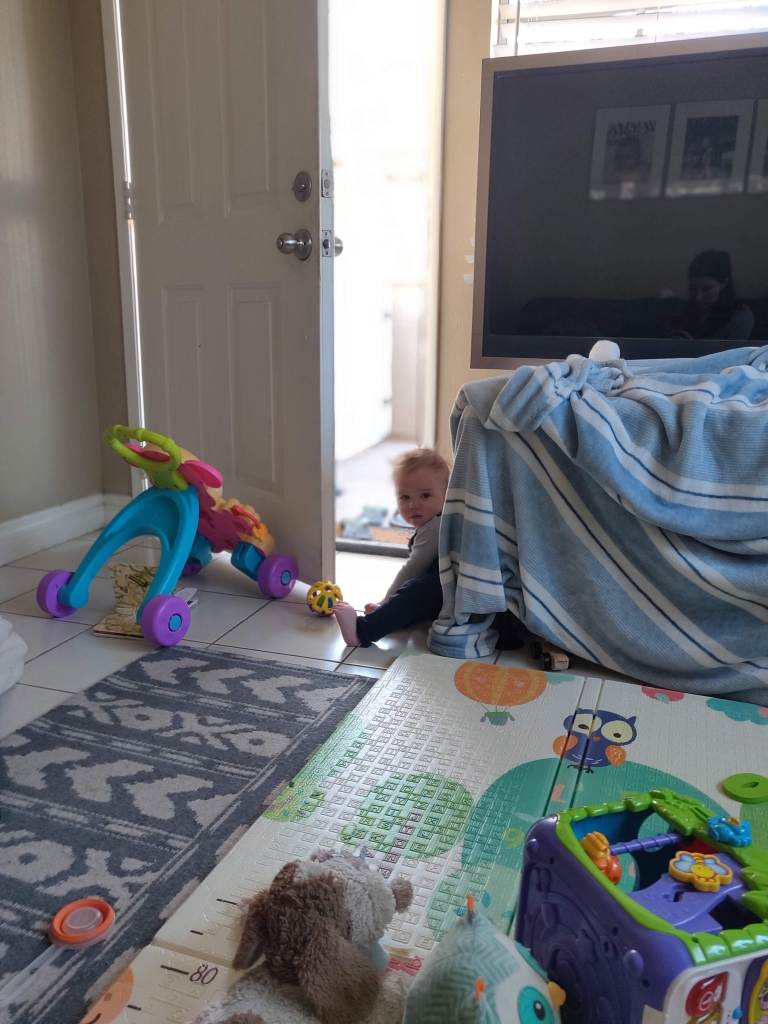
Babies love cardboard boxes, and if you have some to spare, the possibilities are endless.

Your toddler may enjoy something as simple as hiding in the box; stacking them and knocking them down; using them as tunnels or even just sitting in a box while you slide it across tile.

If you need some inspiration, there are literally whole websites dedicated to the craft of toddler boxing: https://kidscraftroom.com/cardboard-box-activities-art-crafts-kids/

[OPINION] Frustrated and Overtired: Persevering with School (and Work and Life) When you Have a Baby

“The quickest way for a parent to get a child’s attention is to sit down and look comfortable.”

Lane Olinghouse

If you’re looking to feel bad about yourself, as a parent or in general, then you may consider turning to social media.

Instagram feeds are riddled with parents posing with their adorable kids, in their clean houses, sharing meaningful moments you just can’t imagine fabricating experiencing yourself.

Your house may be messy, your kids may be overtired, your experiences (fart jokes, throwing food, wearing diapers on your head) may not be picture-worthy.

Parenting is a messy, tired affair. At some point, you’re almost guaranteed to find yourself at an impasse, wondering if pursuing your degree is really worth the added stress that being a parent already presents. You may sit there, in a blazer, now covered in vomit, wondering if your career is really worth the extra hassle.

Parenting is also a juggling act, and you’re likely to drop multiple balls at some point. Quitting your future plans for your kid can provide temporary relief, but it can also lead to resentment, and psychiatrists are of the opinion that this can be detrimental to your children.

According to Robert Firestone, p.h.D at Psychology Today, “Parents’ good intentions are not a substitute for nurturing love, which can only be provided by a psychologically healthy and independent adult.”

Leaving school, or your job, to care for your kid may seem like the best thing to do in the moment. It’s stressful; you’re tired. But your good intentions are not a substitute for loving your child, which, in Dr. Firestone’s opinion, requires you to be both healthy and independent.

So next time you look at social media, and feel an overwhelming sense of guilt that you’re not spending every waking hour with baby; next time you’re too tired to finish your coursework or email your boss– remember that being an independent and fulfilled adult is what helps you love them most. Finishing that degree, pursuing your dream career, will help you get there.

Loving your kids is your one job, so allow yourself the tools to do it well.

How To Work From Home with A Baby

Being a mom means kids banging on the bathroom door like SWAT, asking for a drink, while you’re in the shower. And Dad is in the kitchen.

@SarcasticMommy4

Working from home with kids is no easy feat– whether you’re completing your schoolwork or attempting to juggle a remote job with parental responsibilities.

While there’s no pause button on your baby, and shushing them is a temporary measure sure to be met with screams, there are certain steps you can take to make the situation a little more bearable.

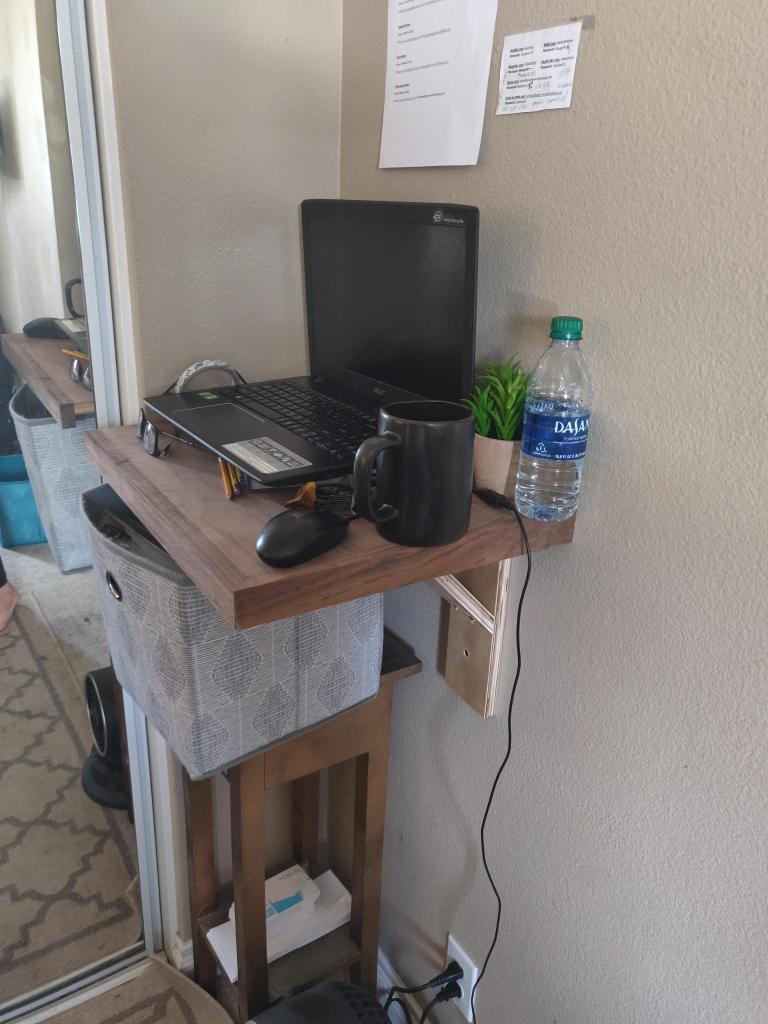
Establishing a work space is critical to ensuring that you can manage your workload. Attempting to complete your job in your kids playroom, or in bed, makes getting into the work mindset all the more difficult (which can, in turn, hinder your productivity).

Your work space doesn’t have to be an office. You could set up a little desk in your bedroom (see the makeshift standing desk in the image above). You could also designate a section of your dining table, or your kitchen, to being a “work only” zone.

Regardless of where you work, it’s important that you are able to separate being a parent from being a student or employee. By isolating yourself in your corner, you can participate in conference calls, timed quizzes and other critical responsibilities without interruption.

Asserting boundaries once you designate your work space is also key to helping you successfully complete work. Tell your kids, or your partner (or both, preferably not in the same tone) that once you’re “at work” you shouldn’t be interrupted.

You may not be able to complete a full 8 hour shift, because, well, baby is your timekeeper now. However, you should aim to create a schedule that fits your child’s routine. For instance, you may work in 2-hour blocks, then spend the interim hour nursing, playing with or comforting your baby.

Lastly, investing in noise-cancelling headphones is a necessity. There isn’t much explanation needed for this; your baby is loud. This is a fact.

While working from home may seem like an impossible task, it’s overall manageable providing you organize your time well, isolate yourself from your toddler’s terror, and remember to clock out when the day is over.

One of the biggest pitfalls of working from home is that you can’t physically leave your workplace when your shift is up, and you may be tempted to continue working well into the quiet hours of the night.

The general consensus is, if possible, don’t. Turn off your computer and remember to a practice self-care if possible. Work-life balance is a cornerstone of virtually any reputable company or college, and this applies to working from home as well.

Three Useless Things You (As A Cash Strapped Parent) Do Not Need to Buy Your Baby

Cleaning your house while your kids are still growing up is like shoveling the sidewalk before it stops snowing.

Phyllis Diller

There are few things more frustrating, as a parent, than seeing how companies love to exploit your tiny bundle of snot joy.

Nonetheless, there are certain necessities that you will have to shell out for. A crib or bassinet? Most definitely. Diapers? Yes. A car seat and stroller? Yup. A wide array of knitted headbands? Nope. 100000 onesies? No. There’s only so many outfit changes you should subject your baby to.

The list could go on and on. Marketing campaigns and Instagram influencers will become the bane of your existence as you try to navigate an expensive world, wondering whether you will really need that or not.

Therefore, in an effort to help save money for what truly matters, here are three relatively expensive items many parents think they need but truly don’t:

  1. A Diaper Genie

    Some parents will swear by their diaper genie, and jump at any opportunity to tell you why you should definitely invest hundreds of dollars in the pale and all of its associated products.

    However, many parents will also attest to the fact that the diaper genie is a glorified trashcan that smells slightly better than your average container. For this reason, if it’s not in your budget (remember to account for pale refills when you calculate viability) then you can definitely do without it and simply take out the trash more. Alternatively, there are plenty of DIY diaper genie tutorials.

  2. Shoes for Babies that Aren’t Walking

    Baby shoes are surprisingly expensive, and if your baby isn’t walking or learning to walk, then they don’t need shoes. This is a pretty concise idea that doesn’t required much elaboration.

    You should buy your kid some warms socks, or better yet, a warm coat 0nesie if you live in cold climate–and leave those expensive booties for when they will actually understand that their feet are attached to their body.
  3. Expensive Teething Toys

    Despite being utterly unnecessary, there are hundreds of overpriced teething toys on the market that parents consistently flock to. $30 rubber giraffes, $50 organic rubber bananas, amber necklaces (?)– there are too many to list.

    If your baby is teething, a cold rag will often suffice. A baby toothbrush that will serve a function later will also do nicely. A cheap, functional teething toy will please your baby’s gums just as much as that overpriced rubber toy in fancy packaging.

    So put it down – walk away.

Baby Hacks That Don’t Lead To Compromise

“Not all who wander are lost. Some are just moms. In Target. Hiding from their children.”

@jocieopc

Being both a parent and a student can be a juggling act at times, and many parents often feel as though they have to cut corners in order to fulfill both roles. While compromise is at times unavoidable, this isn’t always the case.

There are some cornerstones of parenting that are important to individuals, and while you may have fought a losing battle when it came to naming your baby (one day it won’t sting as much) you shouldn’t have to compromise when it comes to raising your kid. Parenting is, literally, a job as old as time. For this reason, it’s become somewhat of a streamlined position over the years, aided in part by cool, new technology.

Feeding

Feeding is an aspect of parenting that you don’t really consider before you have a baby, but that becomes your main topic of conversation (second to poop, and sleep or lack thereof) moments after birth.

Breastfeeding/bottle feeding/formula feeding is a beast best tackled in a separate post, but the general consensus (one hopes) is that a baby fed by any means is best.

However, to touch on the topic briefly, as a student who may be attending college, the prospect of bottle feeding to match demand may seem daunting.

In an effort to save you lots of time in the future, try to pump (after consulting with your pediatrician; they typically recommend beginning around 3 weeks before you go back to school) as much as you can during your sabbatical in order to create a stockpile.

When baby begins solids, you suddenly have a whole new set of chores to perform. For this reason, many student/parents negate their instinct to make fresh baby food and choose to purchase pre-made food instead.

Purchasing baby food from the store is a valid and often necessary option, however, you shouldn’t compromise on what you would prefer to do because of a lack of time.

Investing in the right equipment is an excellent way to ensure that time is on your side when it comes to feeding baby. Baby blenders, like this Baby Bullet, come equipped with a recipe book, a blender with two attachments, food storage containers and a freezing tray. You can even purchase comprehensive baby food makers, that steam and blend your food at the same time, in an effort to cut back on prepping steps.

To save even more time, you may consider pureeing you baby’s food in bulk, and freezing a batch alongside your refrigerator set. You could also purchase organic, pre-cut fruits and vegetables to use in the recipes. While more expensive than whole produce, this option is still cheaper than buying baby food jars or pouches.

Cloth Diapering

Cloth diapering is a contentious topic. However, if your concern for the environment or your baby’s skin trumps your aversion to sh*t, then don’t let time dissuade you from following through with your decision.

Cloth diapering doesn’t have to be time consuming, and one hack that will save you insurmountable amounts of time is investing in a poop sprayer or purchasing disposable liners (which take away from the environmentalism somewhat, but only slightly).

In a nutshell, attempting to scrape solid crap off a cloth diaper can be very time consuming when compared to simply trashing a diaper. These options will save you precious minutes, and lots of disgust.

Alternatively, you could also participate in a diaper washing service. While more expensive, this is a luxury that you may feel is justified over time.

Screen Time

When final exams become a priority, or assignments become dangerously close to being overdue, many parents turn to the TV or an iPad as a means to placate their children while they study. If this is the easiest and best option for you and your family, then you should by all means choose it.

However, if you are determined to avoid screen time for your kids, but are struggling to find a few peaceful hours to focus on your schoolwork, then you may consider investing in a playpen.

Toddlers and infants can, for a brief period of time, entertain themselves if they have no option but to do so. Containing them to a small space with plenty of toys will provide ample separation and distraction to occupy your child a few times a day, allowing you a little time to (hopefully) get a lot done.

How to Keep Calm for Your Kid

It’s like no one in my family appreciates that I stayed up all night overthinking for them.

Anonymous

Anxiety is contagious, and parenting truly teaches you how porous babies can be. 

Children are sponges, and this is most evident when your child’s first word is “f*ck”, or when your baby learns to point the remote at the TV before he learns to clap.

And while leading by example can be truly rewarding, and your mini-me following your every cue is extremely endearing at times, what happens when your kids absorb your emotions too?

What happens when life becomes extremely difficult to cope with, in times of grief, panic or fear, and you need to protect your children from your emotions? How, you may ask, do you keep calm for your kids? 

It’s virtually impossible to hide stress from your children, and your kids witnessing a certain level of anxiety is normal. The first step, when dealing with any emotion, is acceptance. Stress is expected. You’re in college, you’re in the workforce (or will be soon), and most importantly you are tasked with keeping another human alive despite all your failed attempts at resuscitating plants. Accept your anxiety, but then try to manage it. 

Practicing Stress Management, according to Child Mind Institute, is an excellent way to manage strees and prevent passing it onto your kids. Exercise, therapy, a hobby, meds. There are many ways to manage your stress that will ultimately benefit your mental health, and prevent you from passing your anxieties onto your children. 

Sometimes, if your anxiety has a causal or situational relationship to something tangible (*cough* Covid-19 *cough*) then it may be worth cutting yourself off from triggers or any mention of the subject for a brief moment (while remaining abreast of the clear facts) as you learn to manage your stress.

Leading by Example is also an effective strategy when dealing with anxiety or virtually any parenting domain. For example, Child Mind Institute suggests that if you learn methods of tolerating stress, then it may be worth vocalizing them to your kids (providing they are at the stage where they can understand). If you are rationalizing your thoughts, for instance, then you may encourage your kids to rationalize too. “There’s no reason to be scared because…A…B…but it’s okay if you feel that way anyway.” 

Most of all, when learning to keep calm for your kids, it’s important that you understand that asking for help is okay and sometimes necessary. If life is just too much, don’t hesitate to reach out to a friend or a professional. And if your kid needs to whine for a moment (in a secured play area) while you take a few minutes to yourself, to call a friend or to lie in a dark room, then that’s okay too. You’re doing your best; things will get better soon.


Here’s an an extra resource for stressful times: https://www.samhsa.gov/disaster-preparedness


Pre Sleep Training: The Do’s and Don’ts For Newborn Sleep (If You Want Time to Get Sh*t Done)

“A two-year old is kind of like having a blender, but you don’t have a top for it.”

Jerry Seinfeld

Babies are malleable creatures that thrive on routine. This will not be obvious during their first week of life. They will eat, sleep and poop randomly and without any consistency. You will be running around, on an endless loop, wondering what day it is and if that 3 on the clock is A.M. or P.M.

However, as the weeks go by, you will establish a slight rhythm. Things will begin to make a little sense. Suddenly, your baby may seem to nap at roughly the same time each day, or at least with the same amount of hours between each sleep. You may be able to leave the house for a brisk walk; you may be able to drive around your neighborhood and taste that sweet, sweet freedom through a crack in the window.

Don’t be fooled, this isn’t a period to be enjoyed. This is your window. This is when you begin to train your baby to fit your schedule, so you can get your schoolwork done when the semester starts. This is when you begin to establish boundaries that will (gently) nudge your baby towards sleeping when you need to work. Don’t worry, your baby wants this. They’re basically begging for that bedtime routine, they’re screaming for the consistency that the “eat, sleep, play” schedules provide*.

Perhaps “What to Expect When You’re Expecting” would phrase this topic a little more eloquently. Perhaps their section is titled “How to Gently Adjust Your Baby’s Rhythm to Match the Beat of Yours.” However, as a millennial, your attention span is limited. So, in an effort to be as concise as possible…

How To Train Your Baby (*From the Perspective of a Parent, Not a Certified Sleep Expert)

  1. Establish a bedtime routine as early as possible.

    Sleep training will be covered in a future post, and young babies (especially newborns) will not be responsive to this strategy at such an early age.

    However, establishing a bedtime routine as soon as you leave the hospital can encourage baby to view evening and nighttime as periods of longer, more condensed sleep (which equates to more rest and homework time for you). You should expose your baby to daylight during the day, and keep the room very dark during nap times and at night. This helps establish their circadian rhythm and, in turn, reminds your baby that nightfall = bedtime.

    Your bedtime routine should last roughly 30 minutes, and perhaps feature a dramatic reading of Green Eggs and Ham, a warm bath and a slight spritz of lavender while you administer a brief massage (babies are high maintenance; this is a reality you are stuck with now).

  2. Get your baby on a nap schedule.

    Babies have wake windows, meaning how long they should be awake before you delve into overtired land (not a happy place). You should respect your baby’s wake windows, and attempt to get them on a nap schedule where you consistently put them down after the same interval of time following each nap.

    Most newborn to 6 week babies have a wake window of 1.5 hours (this is an average, not a rule). This means that at about 80 minutes, you should start reading your baby a story, singing a lullaby and putting them into their crib for a nap. If you can consistently predict each nap, and they can become accustomed to this routine, you can find a way to comfortably complete your assignments by creating somewhat of a schedule for yourself.

  3. Be wary of sleep crutches.

    Homework, perhaps real work, and life in general are not very accommodating to sleep crutches. Driving for hours on end in the middle of the night, because this is the only way that baby will sleep, is not a sustainable practice.

    Rocking, nursing, swaying, dancing, bopping, pacifiers — these are all crutches that will teach your baby that sleep is associated with one of these activities. Putting baby to bed is difficult, and you should definitely comfort them in the early stages. However, if your baby is not fussy, try putting them down (swaddled, on their back, in their own space, in a dark room, at a comfortable temperature, perhaps with a white noise machine on) and see whether you can bypass these crutches altogether.

  4. If Baby Won’t Sleep, Consider Baby-Wearing

    If your baby, despite your best efforts, will not nap or sleep — then a possibility would be to multi-task and complete your homework while wearing your baby. Proximity to mom is generally irresistible to a tired baby, and working on a history assignment with a mini-me strapped to your chest makes the whole process a little less daunting.

*disclaimer. This is not a verifiable fact, merely speculation based on an assumption.

Design a site like this with WordPress.com
Get started